
What is the difference between MRI and CT scan
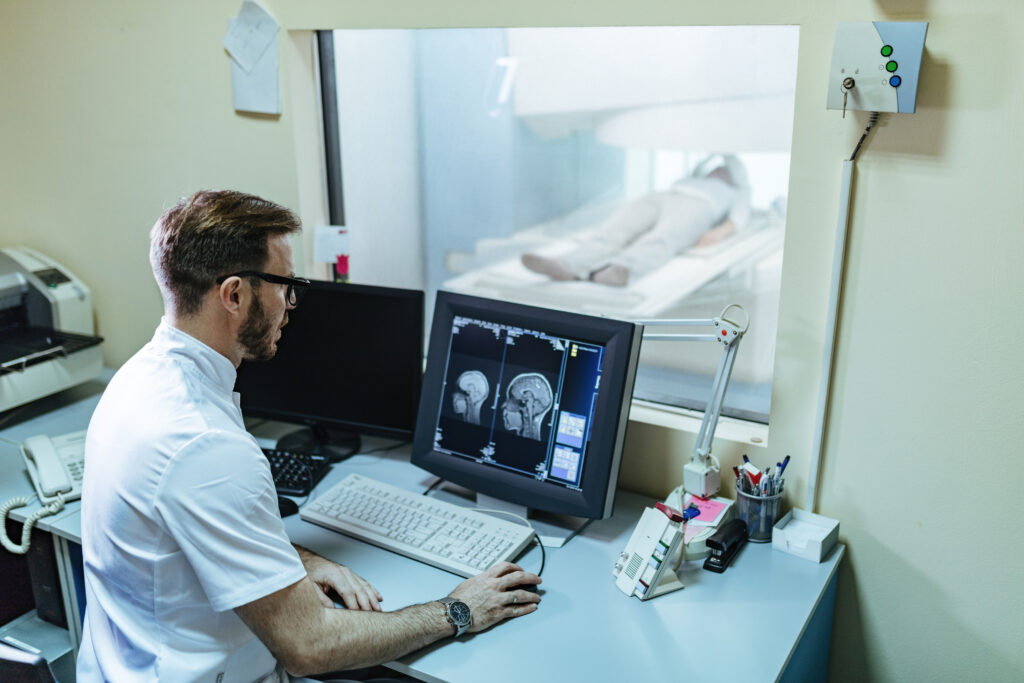
Diagnostic imaging plays a central role in modern medicine. Whether a doctor suspects internal bleeding, a fracture, nerve damage, or a brain disorder, imaging helps uncover what the eyes cannot see. Among the most widely used technologies are MRI scans and CT scans.
They may look similar to some, but they work very differently and are ordered for different clinical reasons.
This blog explains the key difference between MRI and CT scans, how each test works, what they diagnose, and when one may be preferred over the other. It also highlights how clinicians decide to recommend the scan based on clinical findings and how to obtain an accurate scan with precise reporting.
Understanding the Basics: MRI vs CT Scan
Although both scans help doctors see inside the body, their technology and applications are distinct.
What Makes MRI and CT Scan Different?
S.No. | MRI | CT Scan |
Technology | Magnetic fields and radio waves | X-rays (ionizing radiation) |
Best For | Soft tissues (brain, nerves, ligaments, discs, heart) | Bones, lungs, blood vessels, and internal injuries |
Radiation | None | Low to moderate radiation |
Procedure Time | 20–50 minutes | Usually under 1 minute |
Noise | Loud | Minimal |
Claustrophobia Risk | Higher | Lower |
Suitability | Not for patients with certain metal implants | Not for pregnant women unless necessary |
Both MRI and CT scans offer crucial information. Neither is “better” in all situations; the right choice depends on the medical question.
How CT Scans Work
A CT scan (Computed Tomography) uses X-rays to create a detailed 3D image of the inside of the body. The scanner rotates around the body, sending narrow beams of precise radiation that a computer converts into cross-sectional images.
What is a CT Scan Used to Diagnose?
Doctors recommend a CT scan for conditions that require speed and clear visualization of bones and internal structures.
Circulatory Problems | Blood vessel blockages, pulmonary edema, aortic aneurysm |
Abdominal Disorders | Masses in the liver, kidneys, or pancreas |
Lung Issues | Emphysema, fibrosis, lung tumors, pleural effusion, collapsed lung |
Bone & Skeletal Problems | Complex fractures, osteoporosis-related damage, bone tumors |
Cranial Conditions | Hemorrhage, tumors, calcifications, blood flow issues |
Advantages of a CT Scan
- Quick scan (ideal for emergencies)
- Excellent for imaging bones and dense structures
- Helpful in trauma and suspected internal bleeding cases
How MRI Scans Work
MRI (Magnetic Resonance Imaging) uses a powerful magnetic field and radio waves to capture highly detailed images. Unlike CT, MRI does not use radiation.
What Is an MRI Scan Used to Diagnose?
MRI detects soft tissue abnormalities and subtle changes in an excellent way that a CT scan may not be able to interpret.
Brain | Tumors, stroke, multiple sclerosis, epilepsy, Alzheimer’s disease |
Musculoskeletal System | Ligament tears, cartilage injuries, joint disease, muscle injuries |
Gastrointestinal System | Liver issues, pancreatic disease, inflammatory bowel disease, tumors |
Heart & Blood Vessels | Vessel narrowing, heart muscle disorders, congenital abnormalities |
Advantages of MRI
- No radiation exposure
- Superior soft tissue detail
- Best for brain, spine, nerves, joints, and heart imaging
- Can view anatomy in all planes without repositioning the patient
MRI or CT Scan: Which Is Better?
The answer depends entirely on what the clinician needs to examine.
Quick Comparison for Clinical Decision-Making
Clinical Conditions | Recommended Scan | Why Recommended |
Stroke, brain lesion, spinal cord issue | MRI | Exceptional soft-tissue detail |
Fractures, trauma, internal bleeding | CT Scan | Fast and shows bones clearly |
Tumor characterization | MRI (often after CT) | Better imaging of mass structure |
Lung disease | CT Scan | Best for air-filled structures |
Heart muscle assessment | MRI | Gold standard for cardiac tissue |
Emergency cases | CT Scan | Faster and immediately available |
In many cases, doctors use both tests together to form a complete picture.
Radiation Exposure: A Key Difference
- CT scans use ionizing radiation. While doses are controlled, repeated scans should be approached carefully.
- MRI scans involve no radiation, making them safe for children and for patients who require multiple follow-ups.
However, MRI is not suitable for individuals with:
- Certain pacemakers
- Metallic implants
- Cochlear implants
- Some surgical clips
Your radiologist will guide you based on safety protocols.
Choosing Between MRI and CT: How Doctors Decide
Doctors select the most suitable imaging test by assessing the patient’s symptoms, safety needs, and the type of detail required. The table below summarizes the key decision factors and common clinical examples.
Symptoms and suspected condition | Guides whether soft tissue or bone imaging is needed |
Urgency of the case | CT is preferred in emergencies due to speed |
Presence of metal implants | May exclude MRI because of magnetic fields |
Need for radiation-free imaging | Favors MRI, especially for repeated scans |
Soft vs hard tissue detail required | MRI for soft tissue; CT for bones and lungs |
Both MRI and CT scans play a pivotal role in modern diagnostics. In some scenarios, your radiologist may recommend using both tests together to achieve a complete and accurate evaluation.
Common Clinical Scenarios
Clinical Conditions | Scan Recommended | Why Considered? |
Sudden severe headache | CT Scan | Fast detection of bleeding or stroke |
Chronic back pain | MRI | Shows disc problems and nerve compression |
Suspected lung disease | CT Scan | Best imaging for lungs and air-filled structures |
Suspected ligament tear | MRI | Superior visualization of soft tissues |
Which One Should You Choose?
If you are still wondering MRI or CT scan which is better? The answer lies in the medical condition, the level of detail needed, and the urgency of the diagnosis.
- MRI is unmatched for soft tissues, nerves, and the brain.
- CT is indispensable for trauma, bone imaging, and quick evaluations.
Your doctor and the radiology team at PH Diagnostics will guide you toward the safest and most accurate option.
How PH Diagnostics Elevates Your MRI and CT Scan Experience
PH Diagnostics is one of Dubai’s most trusted and technologically advanced diagnostic centers, offering both MRI and CT scans with precision, speed, and comfort.
Why PH Diagnostics Stands Out
Choosing the right diagnostic center can make a meaningful difference in the accuracy of your results and the overall care you receive.
PH Diagnostics is built on a reputation by combining advanced technology, internationally recognized standards, and a patient-centered approach that makes every visit smooth and reassuring.
- EIAC-Accredited Lab
PH Diagnostics follows globally validated quality and safety standards. EIAC accreditation ensures that every scan and lab test is performed with precision and consistency.
- AI-Powered MRI Technology
The center uses advanced MRI systems enhanced with artificial intelligence to deliver sharper, clearer, and more detailed images. This improves diagnostic confidence for both patients and physicians.
- Complete Radiology Under One Roof
PH Diagnostics brings all primary imaging services together in a single facility. Patients can access MRI, CT scan, 4D ultrasound, mammography, digital X-ray, Doppler studies, CBCT, OPG, ARFI, and more without needing to visit multiple centers.
- Open 365 Days a Year
PH Diagnostics remains open every day of the year, ensuring that essential imaging and lab testing are always available when patients need them.
- 350,000+ Patients Served Since 2014
With over a decade of service and more than 350,000 patients, PH Diagnostics has established itself as a trusted leader in Dubai’s healthcare landscape.
- Same-Day Reports & Triple-Verified Results
Accurate reports are delivered promptly, mostly on the same day, and undergo triple verification to maintain the highest standard of reliability.
- Convenient Location Near BurJuman Metro Station
Dedicated parking ensures a smooth visit.
- Home Healthcare Services Within 90 Minutes
Apart from being centrally located in Dubai, PH Diagnostics extends care through home visits for lab tests, IV therapy, doctor consultations, and nursing care, often delivered within 90 minutes.
Every patient is welcomed with warm assistance, guided by expert technicians, and supported through every step of the diagnostic journey. The goal is to deliver precise answers with care, comfort, and confidence.
Get Advanced Imaging with Confidence at PH Diagnostics
With EIAC accreditation, AI-enhanced technology, expert radiologists, and compassionate care, PH Diagnostics ensures that your MRI or CT scan is performed with precision and comfort.
Book your MRI or CT scan today at PH Diagnostics in Dubai, your trusted partner for accurate, early, and reliable diagnostics.